Since its inception in 1818, Frankenstein has taken on many faces, enduring hundreds of years of adaptations. Audiences worldwide were once again graced with another iteration of the beloved novel, this time originating from the brilliant mind of renowned filmmaker Guillermo del Toro. Grand and illustrious, Frankenstein (2025) demonstrates some of the biggest strengths and greatest weaknesses an adaptation can have.
Del Toro’s Frankenstein is the story of one man, Victor Frankenstein (Oscar Isaac), on his journey to achieve greatness, or so he believes. Frankenstein, impassioned and enigmatic in nature, is sure he has the power to reanimate the dead—a motivation no doubt inspired by his mother’s early passing. With the help of a wealthy benefactor, Henriech Harlander (Christoph Waltz), and brother, William Frankenstein (Felix Kammerer), Frankenstein defies his fellow academics and creates something otherworldly—the Creature (played by Jacob Elordi). Although monstrous in appearance, the Creature has a demeanor similar to that of a newborn—something which quickly catches the eye of Elizabeth Lavenza (Mia Goth), who develops an affinity towards him. What ensues is a whirlwind of pain and conflict, revealing the true nature of humanity and all its twisted flaws.
Though del Toro’s Frankenstein painted itself to be a faithful depiction of Mary Shelley’s well-worn novel, it took numerous substantial departures from the original story.
Central themes, such as the pain of parenthood and abandonment, took on a more sinister quality, transforming it into a story of generational trauma and abuse. Most notably, major characters were removed, changed, or added, altering many core features of Shelley’s tale. Unfortunately, this is where the story often feels flat when compared to the novel. As a result of his different backstory, Victor Frankenstein is more overtly vindictive, while the Creature loses his malicious edge that drives the novel’s conflict.
Still, Frankenstein (2025)’s plot holds strong when looked at through an independent lens. Themes that are present within Frankenstein—cycles of abuse, religion, and fatherhood— are deeply personal to the director. The story of Frankenstein is even more relevant with the rise of artificial intelligence, as it reflects how humans can interact with their creations for better or for worse.
As a Netflix adaptation, there was certainly no expectation to deliver on every front. But del Toro’s changes still work; they function to develop a story of his own making, not as a way to mimic one that was already told.
With Oscar Isaac and Jacob Elordi’s outstanding acting, changes in the film were made even more compelling. Elordi’s surprising performance exceeded expectations, balancing the Creature’s sorrow with fiery anger. His role as the Creature is massively different from his earlier roles in movies like The Kissing Booth, but this displays the extent of his skills. Isaac, on the other hand, did an incredible job of bringing Victor Frankenstein to life. Every action of his played up the emotional core of the film.
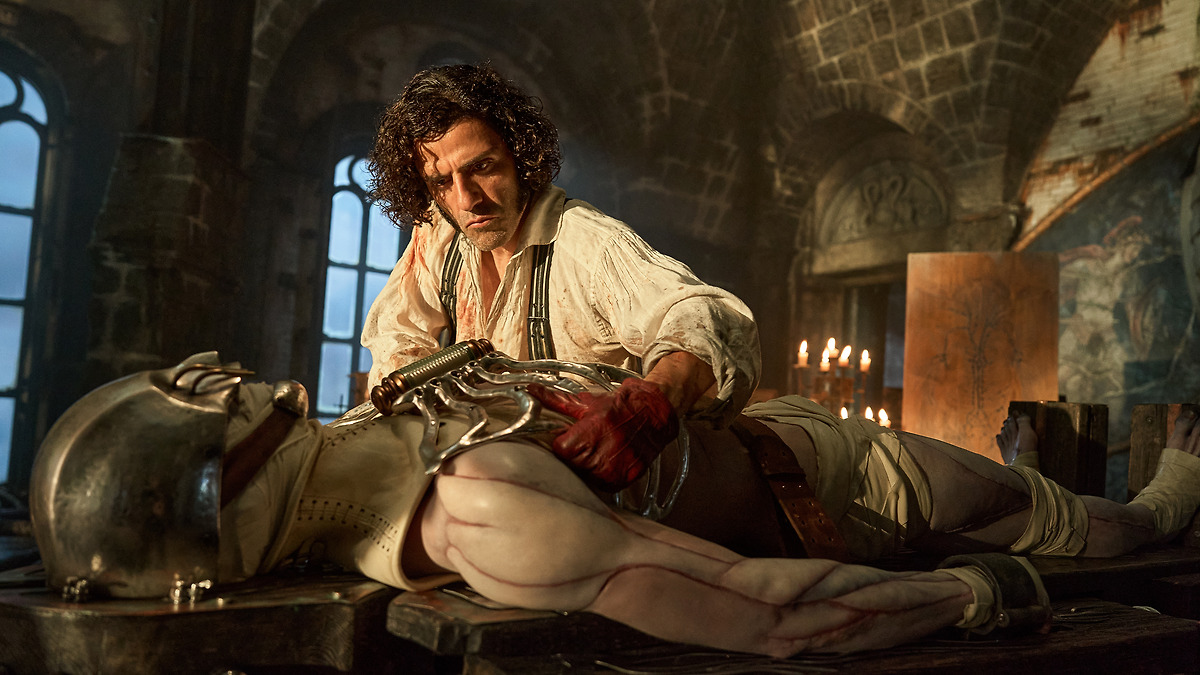
What makes Frankenstein stand out more than anything is, of course, the visuals. Del Toro impresses with his remarkable creative direction, effectively capturing the dark aesthetic of Shelley’s novel. In this film, the beauty of the grotesque is intimately examined, creating both horrific and marvelous sights. Various backdrops are designed expertly, becoming their own form of storytelling in the process. Bustling, dirty city streets are deeply human, while the vast, icy landscapes of the North are heavy with loneliness; emphasizing nature in this way helps hammer down the Gothic influence on Frankenstein. Highlighted by a phenomenal score by Alexandre Desplat, this film is dripping with atmosphere.
The costuming is grand and vibrant, making phenomenal use of color and silhouette. The Creature’s appearance is one of the most faithful yet, and his design evokes an array of emotions in the viewer, especially while he explores humanity. Every outfit bursts with color and grandeur, with detail woven into every seam. Items like Frankenstein’s stark red gloves and Elizabeth’s elaborate gowns become all the more impressive considering their symbolism and overall design.
Despite a great amount of visual intrigue, certain moments of CGI were less than ideal. However, those moments were sandwiched between impressive feats of practical effects, like Frankenstein’s entire laboratory. In some ways, it’s clear that this movie is a Netflix Original, but del Toro’s creativity and ambition outshine the weak moments scattered throughout.
By adapting Frankenstein, del Toro helped provide a new artistic perspective on the story and its themes. Though it doesn’t please everybody, this movie is undoubtedly beautiful and ranks as one of the best screen adaptations of Mary Shelley’s story.
Frankenstein (2025) earns 4/5 stars.