What’s the true difference between a Democrat and a Republican? Media and social commentators talk about these two giants fighting daily, yet the clarification on why they have conflict is often vague and unclear. In order to allow the students of Rangeview to understand the world of politics, we’ll identify, structure, and present what both parties are, what they stand for, along with the history of the parties.
History of the parties
Both parties have an extensive history of how they began.
The history of the Democratic party began in 1828 during Andrew Jackson’s presidential campaign. The first members of the Democrats were staunchly against the Democratic-Republican Party that supported John Quincy Adams in the 1824 presidential election. The party was created purley out of opposition for John Quincy Adams and advocated for states rights and pro-slavery. Its name was meant to emphasize Jackson’s support for the “will of the people,”, and the party was officially named the “Democrats” in 1844 for the same reason.
The Republicans were established entirely to oppose slavery and expansion. Its founders were anti slavery advocates and former Whig party members who joined due to the differences between northern and southern Whigs over the issue of slavery. Its victory in the 1860 presidential election established them as the primary opponent to the Democrats for the next 160 years. The name “Republican” was chosen to represent the return to democratic principles the founding fathers established, more specifically the principles of liberty and equality.
Values and beliefs
Both parties advocate for very different ideas and policies
Democrats believe in the idea of “big government”. What this means is that it’s the government’s responsibility to take care of the people, and the power of the government should be used to provide economic equality for all, and civil liberties to everyone. They support the LGBTQ community, have often shown support for the Black lives matter movement, and women’s reproductive rights, meaning women’s rights to an abortion. Democrats want the economy to be built “from the middle out and bottom up,” rather than “top down”. They support raising the minimum wage, and implementing a progressive tax system to fund public services. They see healthcare as a right and support strengthening the Affordable Care Act, expanding Medicaid, and lowering prescription drug costs. Democrats believe in taking action to challenge the climate crisis, advocating for investment in clean energy, and protecting natural resources. They support increased funding for public schools, making higher education more affordable, and lowering student loan debt. They advocate for tighter gun laws, primarily advocating for universal background checks and bans on certain types of firearms, to reduce gun violence. They support immigration reform, including pathways to citizenship, protection for “Dreamers,” (reference to the American dream idea) and humane border management. Their foreign policy supports working with other nations, often favoring diplomatic reasoning over a show of force. They show support for cooperation between nations, not just for the benefit of only the United States. They are considered the Liberal party of America
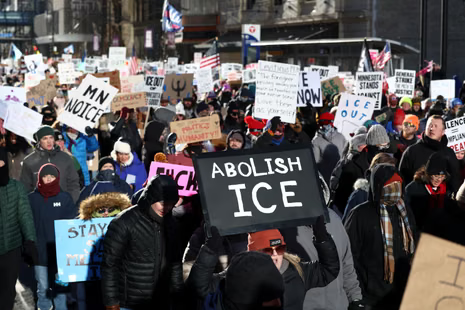
Republicans heavily advocate for a reduced amount of government control, with both spending and control over states. They support deregulation in order to promote economic growth, and are in support of a “free market”, meaning they don’t believe the government should interfere with how the economy should run. They advocate for individual responsibility over government-funded social welfare programs. They often connect their views to “traditional family values” and oppose the right to an abortion, and have strong support for religious freedom, especially for Christians. They are strong defenders of the Second Amendment, and fight for looser gun laws, wanting not to restrict the freedoms of the American public. They often focus on strong borders, prioritizing increased enforcement, reduced illegal immigration, and supporting legal immigration processes. They support a strong military and an aggressive pursuit of U.S. national security, often favoring an “America First” idea to trade and diplomacy. They are considered the Conservative party of the United States.
The factions of each party
The Democrats and Republicans both are split into several “factions” each with their own personal beliefs.
The Democrats factions are listed as follows:
The progressive party favors bold systemic changes that aim to either change or replace the current system of our government and society. They advocate for universal healthcare, aggressive climate action, cancellation of student debt, and stronger labor protections.
The moderate Democrats favor centrism and cooperative action with Republicans. They focus on maintaining a strong social safety net without expanding government control the same way the progressives propose.
The Conservative Democrats are the furthest right on the political compass of Democrats, and are the smallest faction. They emphasize border security, traditional energy sources, and are often skeptical of expanding federal spending. They often agree or align more with Republicans.
The Republican factions are much more diverse and are as follows:
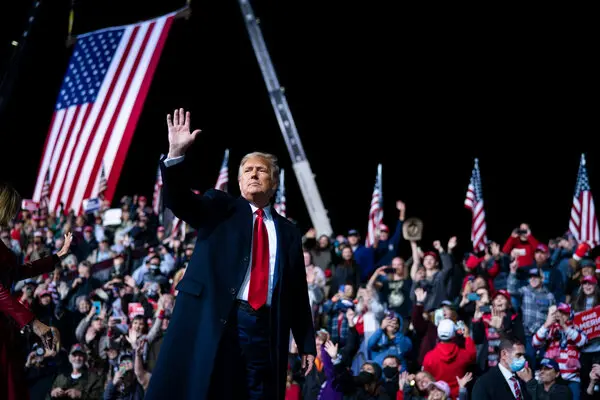
Populists are the newest faction of Republicans, and are influenced by Donald Trump. They prioritize economic protectionism, strict immigration control, are very skeptical of global institutions, and advocate for foreign policy isolationism, putting America first. They are also the most aggressive and anti LGBTQ and Black lives matter of any of the factions.
The moderate Republicans are the middle of Republican groups. They favor traditional conservative ideals, strong national defense, free trade, and predictable governance, advocating purely for government freedom, and a free market.
Libertarians are the faction that advocate the most for personal freedom, as they fight for the reduction of the national deficit, deregulation, and tax cuts. They oppose Republicans on foreign military intervention, and often don’t agree with an increased military budget.
With both economic and military conditions changing around the world, we can only hope to see what both parties may bring to the table. Whether or not Trump will change the Republican party, or the progressives of the Democrats shift the party more to the left, we can only sit and wait for the future.