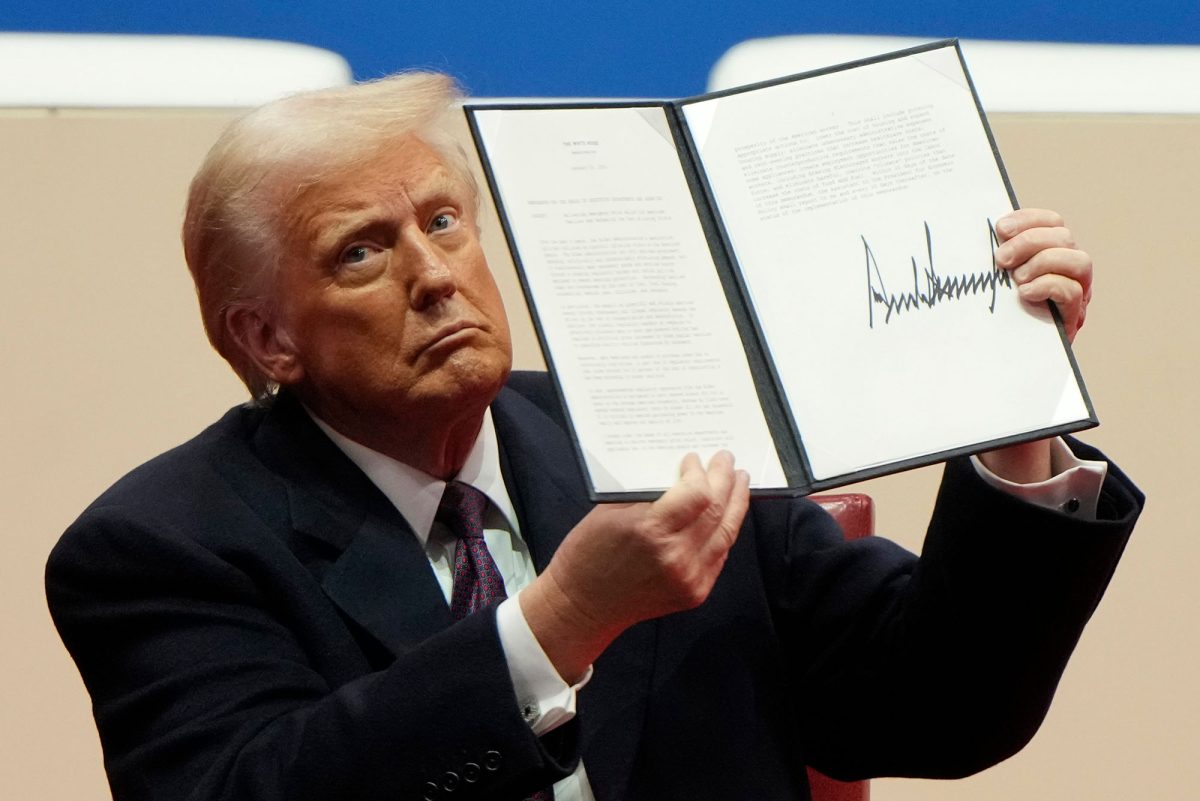
On November 4th, 2024, Donald Trump was re-elected to office, becoming the second president in history to win two non-consecutive terms. The first was Grover Cleveland, who served as the 22nd and 24th president in the late 19th century. With such a big accomplishment, the Republican Party was very confident in its grip on the federal government.
At the beginning of this administration, the right seemed quite pleased with Trump. Elon Musk, the richest person in the world, was leading a department focused on government efficiency. Republicans had “Owned the libs” by defeating the democrats, and taking control of all three branches of the government. To them, America was finally fixed.
However, on November 4th of 2025, the first major election after Trump’s victories, Democrats swept the Nation, securing the governor position of Virginia and New Jersey, along with the mayor of New York City being a progressive Democrat. A Quinnipiac University poll found 45% of voters thought Republicans in Congress were more responsible for the shutdown, compared to 39% who blamed Democrats. Additional elections, such as one from Gallup, an American analytics and advisory company, echoed these findings, with 53% of respondents expressing dissatisfaction with Trump’s performance, particularly citing economic and immigration issues. Furthermore, a CNN exit poll showcased that younger voters leaned heavily Democratic, citing concerns about the current administration’s policies. All while Trump’s approval rating dropped to 48 percent, the lowest so far this term. Showing these two side by side, it’s clear that Trump’s handling of the presidency, and the republicans’ reputation, are falling fast.
So what happened? Why the sudden change in attitude towards Trump? It’s essential to consider multiple contributing factors in understanding this shift in public opinion. While his scandalous relationship with Jeffrey Epstein, his inappropriate handling of the immigration crisis, and his inability to save the economy as he promised are certainly significant, there may be other elements at play. Public perception of leadership can be influenced by media coverage, emerging political movements, unforeseen global events, and changing societal values. These dynamics could have further complicated Trump’s ability to retain widespread support. Thus, his declining approval may result from a convergence of these interrelated factors.
Trump’s relationship with Epstein
It’s no secret that Trump and Jeffrey Epstein have had a relationship, considering the photos of the two from the early 2000s and their frequent visits with each other. During his campaign, Trump promised to release the entire Jeffrey Epstein files to the public, citing transparency as a key campaign promise. However, according to Trump, those files do not exist. Trump’s consistent avoidance of the topic with the press has been apparent. White House Press Secretary Karoline Leavitt has repeatedly denied the claims, emphasizing that it was a ‘manufactured hoax’ aimed at impeding the President’s agenda. Supporters of Trump argue that the focus on his past association with Epstein is an attempt to distract from his policy achievements. At the same time, Trump’s apparent dismissal and denial of any wrongdoing have intensified scrutiny over his previous associations.
Trump’s handling of immigration
One thing Donald Trump campaigned on was closing the border and deporting every single illegal immigrant in the country, no matter the cost. Trump’s biggest promise in his campaign was to secure the border, and he had promised his mass deportations for years. This in itself was controversial, but what made his actions condemnable was the methods he permitted ICE to use. Videos of elderly individuals and innocent women being body slammed to the ground and needing hospitalization by ICE agents show the violence against Americans. Naturalized citizens and people who were on their way to get their green card, being arrested and deported without a trial, have shown the cruelty and lack of justice of this administration. While many Democrats do not support deportation at all, the criticism against his administration specifically does not run from the fact that he is taking action against illegal immigrants, considering many Americans voted for him because of this reason, but rather the extremities. The unnecessary force and violence that ICE has shown to the United States has been seen as a force that Trump has used to threaten control over the people of the United States.
Inability to fulfill his economic promises
Economic prosperity is a promise almost every president has made in their campaign. However, Donald Trump made a very bold claim. He promised that he would lower the cost of everything, gas, groceries, and any commodity that people need, on day one. He promised to completely end inflation. In North Carolina, on August 24th, 2025, he said, “Prices will come down. You just watch: They’ll come down, and they’ll come down fast, not only with insurance, with everything.” A very bold claim, but did Trump live up to his promises of economic relief? Quite the contrary. Since Donald Trump has been in office, the United States dollar has lost 11% of its value. Grocery prices, along with gas across the United States, have not gone down or seen any relief, and have actually seen an increase in prices that was much more dramatic, similar to COVID times. The economy is not directly controlled by the president, but whether or not he actually would have been able to fix it is not the issue. The issue is his lying and manipulation of his supporters, convincing them he could fix what the Biden administration supposedly ruined.
What’s the takeaway?
Trump’s actions, not only against the people of the United States, but his blatant lying, his estranged relationship with serial sex offender, Jeffrey Epstein, and his obvious disrespect for the other side of the aisle and inability to hold up his promises or even provide any substantial relief to the people, is what has not only tanked his approval, but what has shifted the Republican party into the negative image that it is viewed as today.