For a lot of people scrolling through Netflix after homework, KPop Demon Hunters just looks like another flashy animated movie. But here at Rangeview, it’s become something bigger—and way more successful—than anyone expected. I wasn’t listening to K‑pop at all; my playlists were almost all hip hop and R&B, like Ice Cube and Leon Thomas. Then “Your Idol,” a song from an animated movie, ended up on the same playlist as “It Was a Good Day,” which says a lot about how sharp the songwriting and production are. In just a few months, it’s gone from random recommendation to a record‑breaking phenomenon that’s shaking up music charts and surprising students who didn’t even think they liked K‑pop, myself included.
Let’s start with the numbers. KPop Demon Hunters dropped on Netflix three months ago and immediately became the most‑watched movie in Netflix history—something no one saw coming from an animated K‑pop film. On the music side, it’s just as wild: four songs from the film hit the Billboard Hot 100’s top ten and the soundtrack went Platinum. Most animated movies would be lucky to have one song chart; this one is moving like a real K‑pop act, which is part of what makes its rise so surprising.
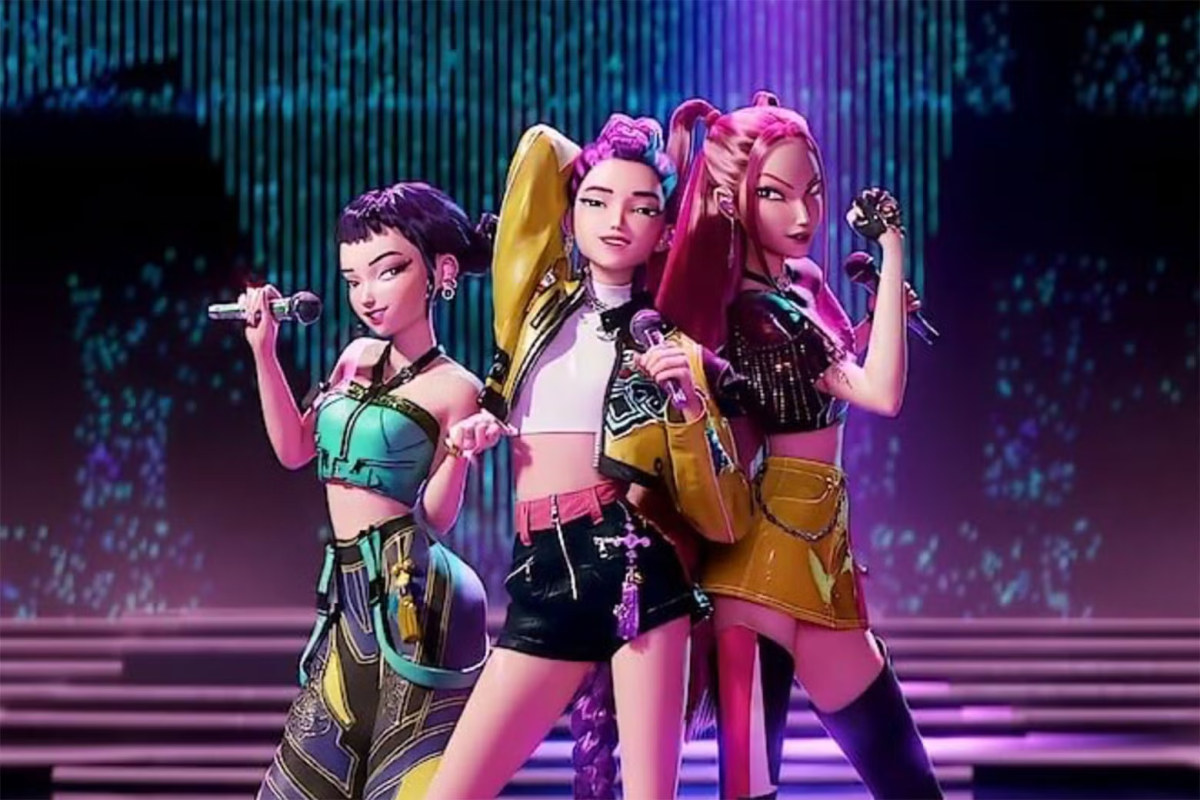
A big reason this unlikely hit works is who’s behind the music. Artist EJAE isn’t just the singing voice for Rumi—she also wrote some of the movie’s biggest songs, including “Golden,” “How It’s Done,” and “Your Idol,” helping turn what could have been a niche soundtrack into a mainstream chart threat. Audrey Nuna brings Mira’s singing voice to life, and Rei Ami voices Zoey, and together they sound like an actual group, which makes it even more shocking that an animated lineup is competing with real‑world idols. That feeling got even stronger when the three stepped off the screen and onto a real stage, debuting live on The Tonight Show—an unexpected milestone that usually belongs to established artists, not characters from a movie.
Behind all the performances and playlist takeovers, the film is also changing how the industry sees this kind of project. Fans aren’t just watching; they’re making edits, fan art, and videos, basically turning the fanbase into its promo department and pushing the movie even further into the mainstream. At Rangeview, that shows up in smaller ways too—my friend Makai and I have found ourselves jamming to “Your Idol” in class, and he even joked about making “Golden” his number one song for 2025. One silly VMAs photo from Rei Ami turned into hundreds of fan edits and animations, proof that the reaction is way beyond what anyone would expect from a typical animated release.
Kang also used KPop Demon Hunters to do something animation rarely lets women do: be completely, unapologetically silly—and the fact that a movie this weird and chaotic has become such a hit is part of what makes its success so surprising. Seeing three girls be chaotic, cringey, and bold on screen feels closer to how a lot of us actually act with our friends, which helps explain why this unexpected hit is connecting so strongly with people. You don’t have to be a K‑pop fan to get something out of it. KPop Demon Hunters isn’t just another animated musical with a couple of catchy songs; it’s a movie almost no one expected to blow up like this—breaking records, shifting expectations about what an animated film can do, and pulling in people who never thought they’d be singing along