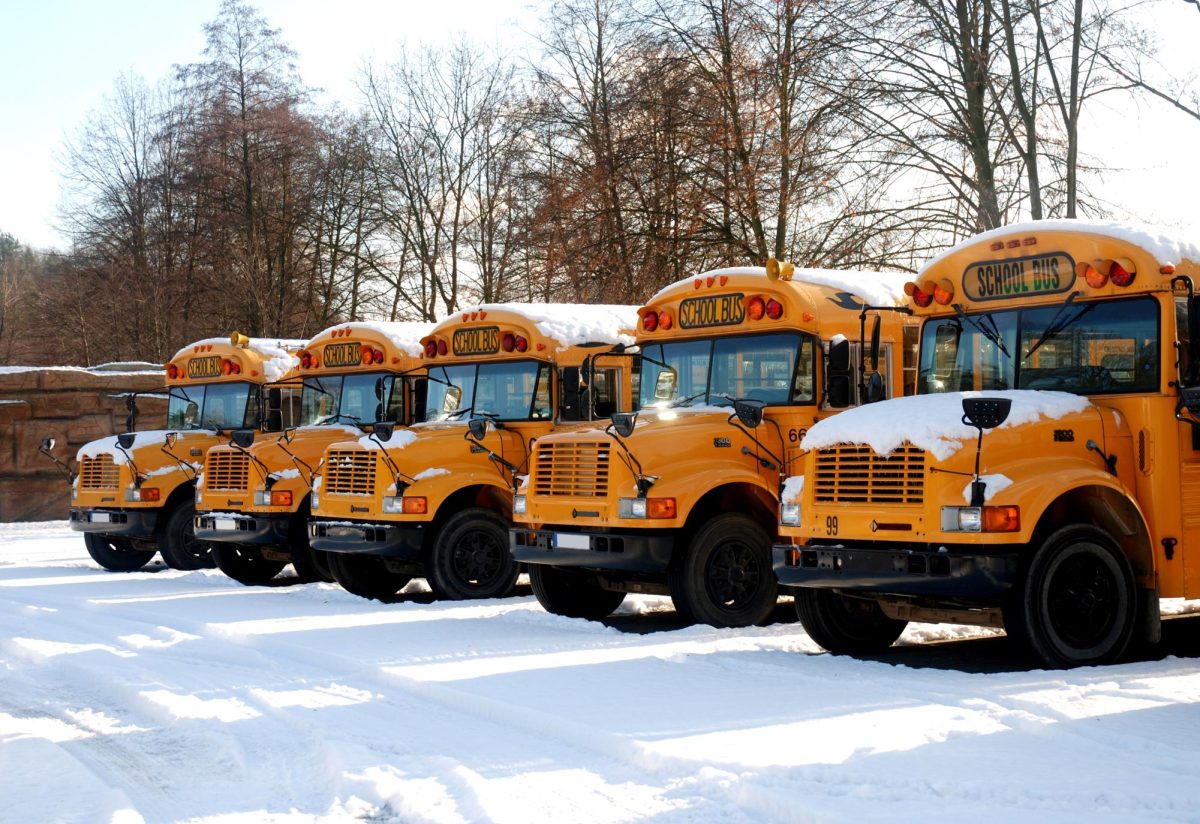
As winter approaches, high schoolers at APS start hoping for that elusive snow day every time it storms. But have you ever wondered what actually goes into the decision to cancel or delay school for snow?
A lot of students think that a big snowfall automatically means school’s out. Just this past Tuesday, students were already debating in the halls whether there’d be a late start or a closure on Wednesday because snow was coming.
“I think they’re going to give us a one-hour delay,” said Jaden, a junior at RHS. Makeas, also a junior, agreed: “I honestly think they should because we are getting a lot of snow tomorrow.”
But here’s the twist: it’s not just about how much snow falls. The real deciding factor is whether the school can be made safe in time. If crews can clear the roads, sidewalks, and entrances before the first bell, chances are you’re still going to school.
“The decision is made by the district superintendent,” says Mr. Breckt, dean of students. “Typically, it isn’t about how much snow is falling, but whether we can clear the roads for students and staff to commute safely. If we can do that, we usually keep school open.”
So when Wednesday rolled around and there wasn’t a delay or a snow day, some students and even a few teachers weren’t happy. But since most roads and sidewalks were cleared early—and the snow didn’t stick because the ground was still warm—there really wasn’t a reason to delay. School went on like any normal day.
In the end, whether school closes or not is all about safety and getting everyone in on time. Just because there’s a lot of snow doesn’t mean classes will be canceled. A lot is happening behind the scenes to make the safest call possible. So next time you’re hoping for a snow day, remember—there’s more to it than just the weather app.